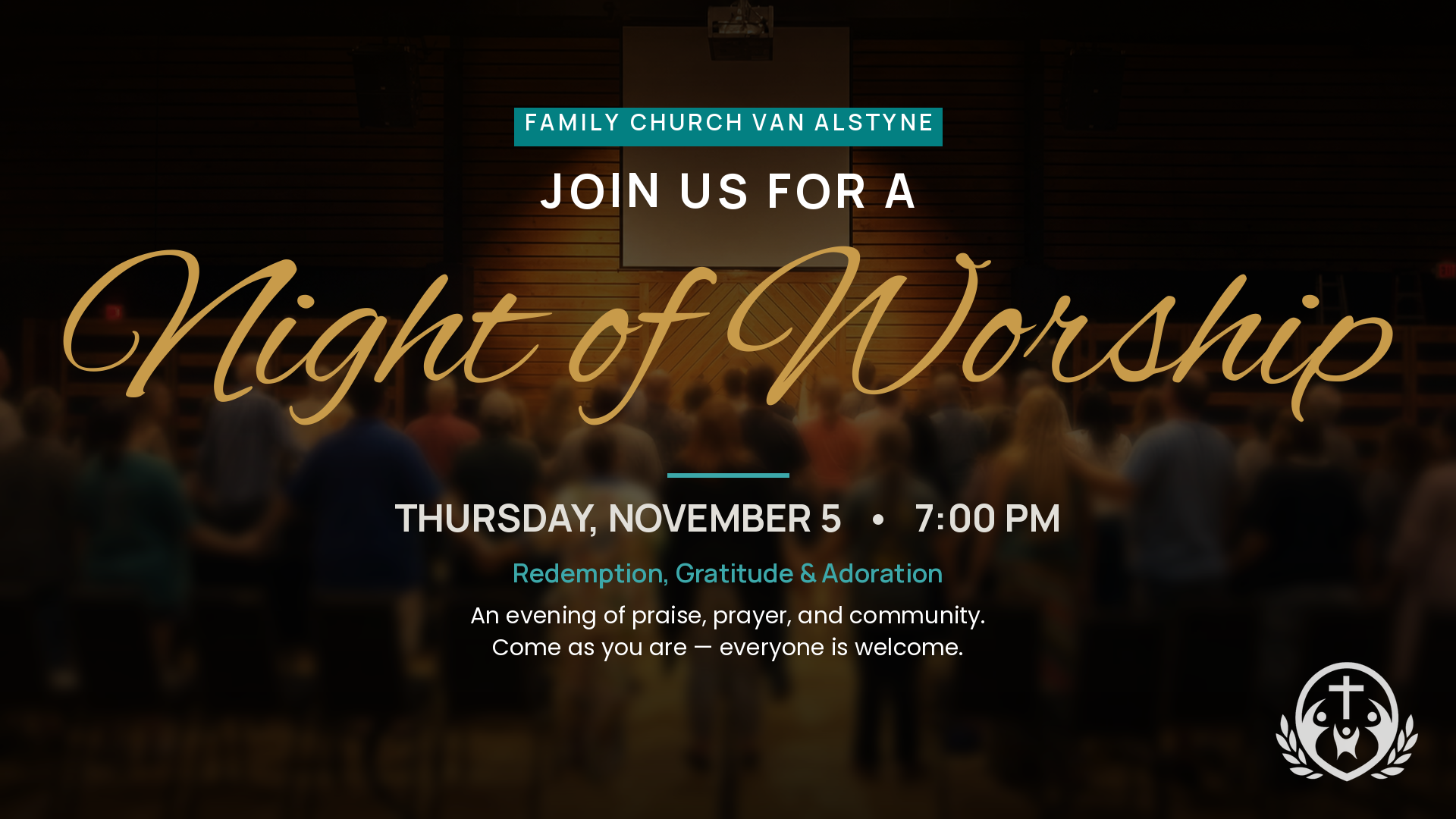
Devotional #1 for our November 5th Night of Worship.
Blood, grace, and the humility that follows a finished purchase.
Songs of Redemption:
Redemption is a buy-back. The word does not mean improvement, and it does not mean God decided to look the other way. It means a price was paid to release someone who could not pay it himself. Paul puts the mechanism in one sentence and does not soften it: “In Him we have redemption through His blood, the forgiveness of our wrongdoings, according to the riches of His grace which He lavished on us” (Ephesians 1:7–8). Present tense. Through His blood. Forgiveness, not management. Lavished, not rationed.
If you take the blood out, you do not have a gentler gospel. You have no gospel. The church is right to say it could only have been the blood. Not a better week. Not a cleaner performance. Not another attempt at earning what was never for sale. Hebrews is plain about the terms: “without the shedding of blood there is no forgiveness” (Hebrews 9:22). “He entered the holy place once for all time, not by the blood of goats and calves, but by His own blood, having obtained eternal redemption” (Hebrews 9:12). Once. His own blood. Eternal. That is why a person can say, without drama, that everything changed, and that the old self is getting harder to recognize. Shame met the Most High and did not survive the meeting. We were washed from the inside. The cross is not a metaphor for costly love. It is the place where the Son of God bore wrath that belonged to guilty people and settled the account.
Thanks has to follow that fact, or it turns into a mood. We do not thank Jesus for a general kindness and then discover, later, that blood was involved. We thank Him for the blood applied. Applied is the word that keeps this from staying in a history book. I was a wretch, and I remember who I was. Lost. Blind. The breach was too wide for anyone on this side to cross. From the far side of that chasm, He had us in His sight. He left a throne to pay a debt, broke the chain, and for the first time there was hope. “The blood of Jesus His Son cleanses us from all sin” (1 John 1:7). Washed white. Brought from darkness into light. Peter says we were not redeemed with silver or gold, “but with precious blood, as of a lamb unblemished and spotless, the blood of Christ” (1 Peter 1:18–19). There is nothing stronger than that. It does not merely clean a record. It calls us sons and daughters. We are ransomed by the Father through the blood.
Then look at what the ransom gathered. All these pieces, broken and scattered, gathered in mercy, mended and whole. Empty-handed, but not forsaken. That is an accurate inventory. Competent people hear “redeemed” and start planning the rebuild. We label the failure, write the lesson, and trust the next version of ourselves to hold. Scripture does not describe the work that way. “He heals the brokenhearted and binds up their wounds” (Psalm 147:3). The binding is His. Amazing grace is the right name for it, and only if we keep the hardest word in the verse. A wretch. Edit it into something kinder and the line becomes a compliment. “While we were still sinners, Christ died for us” (Romans 5:8). I once was lost. I am found. I did not find myself. The love you can see, once your eyes are open, is a Man laying Himself down and raising the broken to life. He takes the failure. He takes the weakness. He sets the treasure in a jar of clay, “so that the surpassing greatness of the power will be of God and not from ourselves” (2 Corinthians 4:7). The point of the vessel is not that it stopped being clay. The point is what it holds.
Which means redemption that does not humble you has been misunderstood. You cannot receive a payment that size and keep your posture. The cross is what does the humbling. He hung in our place. He took the form of a servant and became obedient to the point of death, even death on a cross (Philippians 2:7–8). You do not look at nail-scarred hands and stay impressed with yourself. Jesus told a story about two men in the temple. One listed his disciplines. The other would not lift his eyes and said, “God, be merciful to me, the sinner” (Luke 18:13). That man went home justified. Lavished grace is a humiliating kindness. It does not make us impressive. It makes us honest. “God is opposed to the proud, but gives grace to the humble” (James 4:6). Pride is the attempt to remain the paying party after the debt has been marked paid. God, You humble me. That is not a technique. It is the only sane sentence left.
The measure of this gift is not the quality of our repentance or how well we can narrate our own rescue. The measure is His riches. Isaiah had already said where the pouring would land: “though your sins are as scarlet, they shall become as white as snow” (Isaiah 1:18). Scarlet is a dye, not a stain you manage. Snow is a replacement. Wrongdoing named, borne, and removed, “as far as the east is from the west” (Psalm 103:12). If you are counting pieces this morning, you are not late. The blood of Jesus is not embarrassed by a specific sin. Specific is where lavish grace becomes obvious, because only a rich mercy pays for a named wrong and then calls the debtor a son.
“He made you alive together with Him, having forgiven us all our wrongdoings, having canceled the certificate of debt consisting of decrees against us, which was hostile to us; and He has taken it out of the way, having nailed it to the cross” (Colossians 2:13–14). Nailed. Taken out of the way. That is the redemptive work of Christ. Not a process we complete. A purchase He finished. Thank Him for the blood applied. Then stay low. The vessel was never the glory.
Unworthy, but His,
Nick
A Guide for Prayer
Set a few minutes aside. Do not hurry the silence at the start. Then pray in this order.
- Name the debt honestly. Do not offer God a category. Name the wrongdoing you have been managing, explaining, or hiding. Agree with Him that it was sin, not a misunderstanding.
- Thank Him for the blood applied. Thank the Lord Jesus, by name, that it could only have been His blood. Thank Him that it washed you white, brought you from darkness into light, and calls you a son or a daughter. Not your improvement.
- Hand Him the pieces. Name what is still broken and scattered. Ask Him to gather it in mercy. Ask Him to lay Himself down again over that place, and to keep the treasure in you obviously His.
- Ask Him to humble you. Pray the tax collector’s prayer without decorating it: God, be merciful to me, the sinner. Look at the cross until your posture drops. Ask Him to oppose any pride that wants to share credit for a gift.
- Receive the lavish part. Read Ephesians 1:7–8 slowly. Thank Him that the measure of your redemption is the riches of His grace, not the strength of your week. Ask Him to make that freedom visible in how you treat the person you are most tempted to keep score with.
Close by praising Christ for a finished purchase, not for a feeling. If the feeling comes, receive it. If it does not, the blood still stands.